How Long Does SEO Take for a New Website? An Honest Timeline (With Real Numbers)
How long does SEO take for a new website? Usually 4–12 months — but local terms can hit page 1 in 30–60 days. An honest timeline with real Search Console data.

How Long Does SEO Take for a New Website? An Honest Timeline (With Real Numbers)
By Evan Rief, Founder & Lead SEO Strategist
Last reviewed: August 2026
This post draws on real Clementine SEO client campaigns — including a multi-location medical wellness account whose live Google Search Console we're happy to walk through on a call — plus published data from Google and Ahrefs. Timelines below are ranges, not promises: your results depend on your market, your competition, and how new your domain is. Where I cite a fast result, I'll flag it explicitly as a best case, not the norm.
Short answer: a brand-new website usually takes 4 to 12 months to see meaningful SEO results — the range Google's own guidance implies. But it splits sharply by target. On lower-competition local terms, a new site can reach page one in roughly 30–60 days, with compounding gains at 60–90+ days. On competitive or national terms, expect 6–12 months or more. As a documented best case — faster than typical — one of our clients hit #1 in three weeks on a low-competition local term.
Key Takeaways
Brand-new sites take longer than established ones; the realistic window for meaningful results is 4–12 months, per Google's own framing.
Local, low-competition terms are the exception: page 1 in ~30–60 days is realistic, with compounding gains at 60–90+ days.
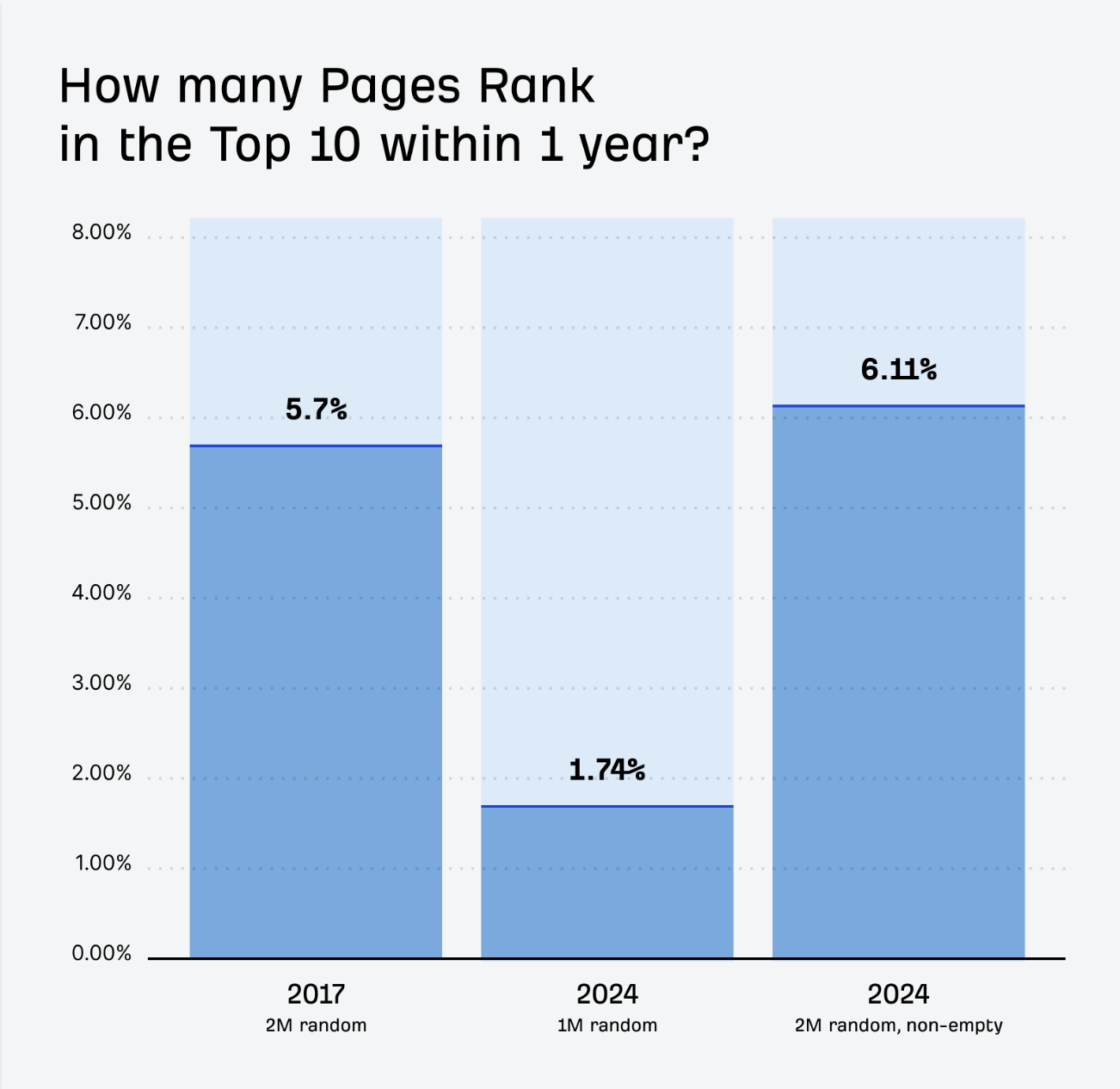
The odds on competitive terms are steep — current Ahrefs data shows only 1.74% of new pages reach the top 10 within a year (6.11% under a fairer filter).
Our documented best case: #1 in 3 weeks on a low-competition local term — explicitly the ceiling, not the promise.
Anyone guaranteeing #1 rankings on a fixed date is a red flag; ranges, not guarantees, are the honest answer.
How long does SEO take for a new website?
Here's the committed version, because "it depends" is a cop-out when you're deciding where to spend money. A brand-new site typically needs 4 to 12 months for meaningful SEO results. Google has confirmed this indirectly: Google's SEO Starter Guide notes that every change you make takes time to be reflected, that some changes take a few hours and others several months, and that you generally want to wait a few weeks to assess whether your work had a beneficial effect.
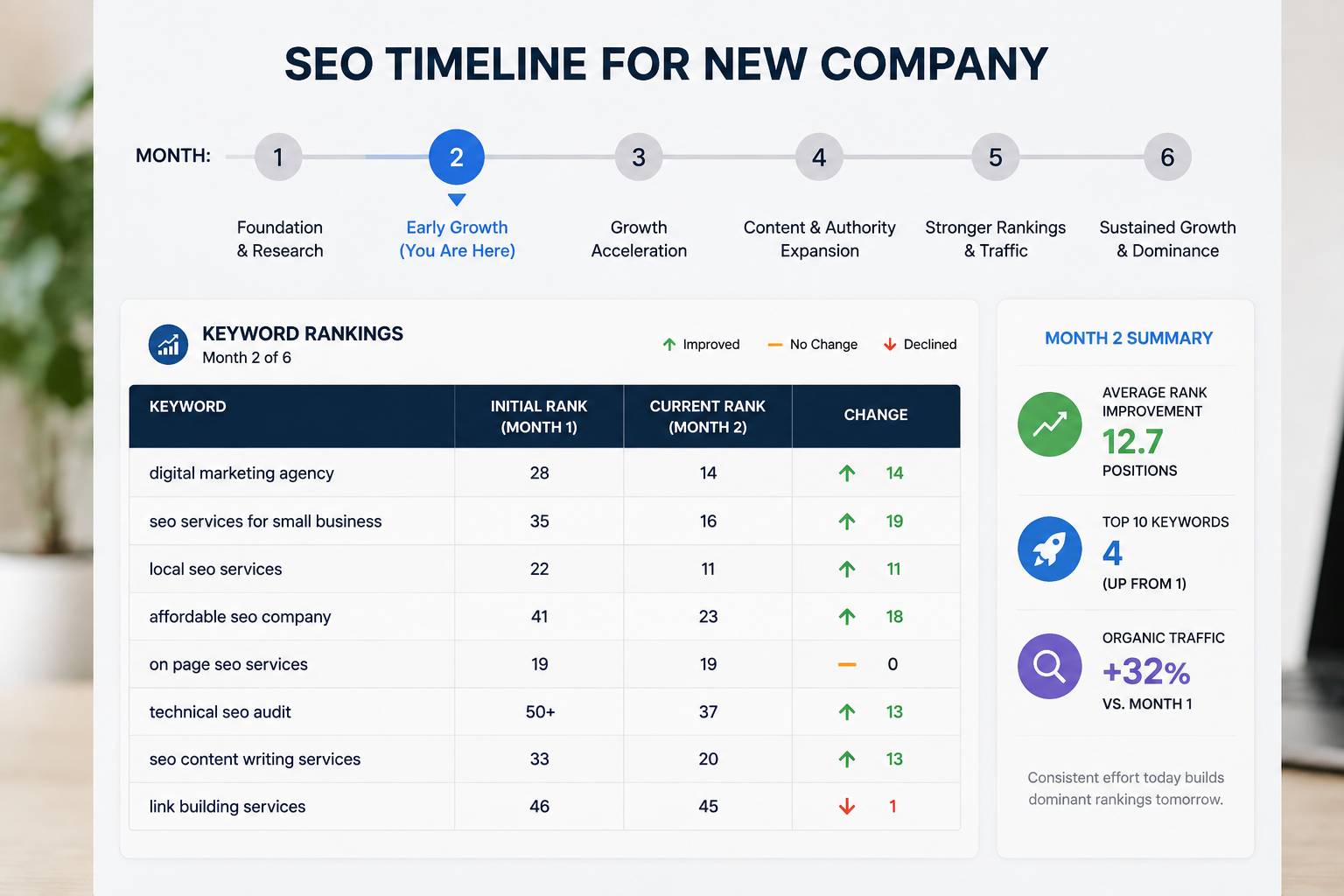
But that single range hides the most important variable — what you're targeting. In our campaigns we see low-competition local terms reach page one in about 30–60 days, with the real compounding showing up at 60–90+ days. Competitive or national terms are a different sport: 6–12 months or longer.
As a documented best case — faster than typical — one client reached #1 in three weeks on a low-competition local term. That is the ceiling, not the promise, and I'll show you exactly why later.
Most of what shortens that timeline is disciplined execution: fixing indexing, targeting the right terms first, and publishing consistently. That's the backbone of how our monthly content engine works. The next section breaks the timeline into the three cases that actually matter.
New site vs. local site vs. competitive keywords: the real timeline split
The timeline depends almost entirely on two things: what you're targeting and how old your domain is. Domain authority — a rough measure of how much trust a site has earned, largely through links and age — starts near zero on a brand-new site, and that's what stretches the wait on hard terms.
Across our client Search Console accounts, low-competition local terms almost always move first — often before the homepage even ranks for the brand name. That's the wedge a new site should lean on.
Low-competition local term — ~30–60 days to page 1, compounding at 60–90+ days. Driven by thin local competition, geo intent, and Business Profile support. Confidence: first-hand, from our campaigns.
Moderate local/service term — 3–6 months. More competitors; needs supporting content around it. Confidence: mixed first-hand and industry data.
Competitive / national term — 6–12+ months. High-authority incumbents and old pages dominate. Confidence: industry data (Ahrefs).
The competitive row is where honesty matters most. Ahrefs' study of how long it takes to rank found only 1.74% of newly published pages rank in the top 10 within a year. It also found that 72.9% of top-10 pages are more than three years old, and the average #1 page is five years old. Under a fairer filter — random URLs with real English content — 6.11% reached the top 10 within a year. One more finding worth knowing: of the pages that did crack the top 10, 40.82% got there within their first month — early momentum on winnable terms is where the odds live. Either way, competing head-on with aged incumbents is a long game.
Month-by-month: what actually happens in months 1–3, 3–6, and 6–12
The scaffold below is the shape everyone uses, but here's the concrete version.
Months 1–3: indexing and technical fixes come first, then the earliest content. Impressions — the number of times your pages show up in search — start climbing before rankings visibly move. Google has confirmed the timing: some changes take effect in a few hours, others could take several months, and in general you want to wait a few weeks to assess the effect.
Months 3–6: in our campaigns, rankings begin moving in earnest — and they bounce. Low-competition local terms hit page one, and early leads become possible.
Months 6–12: compounding. More keywords enter the top positions, and the connection to leads and revenue gets clearer.
One thing to expect: rankings often dip before they stabilize. In our accounts that's normal behavior while Google settles a new page's position — not a sign the work failed.
Leading indicators vs. real results: what "progress" looks like before rankings move
There's a difference between activity and outcomes, and conflating them is how owners get misled. Activity is indexing, rising impressions, and rankings inching upward. Outcomes are leads and revenue. The first predicts the second — but they don't arrive at the same time.
Rising Search Console impressions are the first real signal. In our accounts, impressions reliably move weeks before clicks, and clicks move before leads. If month two shows no impression growth at all, something's wrong — and that's worth a hard conversation.
You'll hear "you won't see anything for six months." That's not quite true. Indexing status and impression trends are visible far sooner; they're just not the numbers that pay your bills yet.
So here's what you should demand to see from any SEO in months 1–3: the count of indexed pages, an impressions trend line, the content that's been published, and a keyword rank-tracking report. If a vendor can't show you a clear monthly ranking report, that's a signal in itself.
Why new sites are slower: the Google Sandbox and trust-building, explained
The "Sandbox" is an informal term for the period a brand-new domain struggles to rank while Google builds trust in it. Whether it literally exists is genuinely debated.
Google representatives have said Google doesn't have a literal sandbox, while acknowledging that some algorithms can behave like one for new sites — holding them back while the system figures out where a new site belongs. I'd treat it as debated-but-observable, not settled fact. Present it that way and you'll never be misled by someone claiming a fixed "6–9 month sandbox."
What isn't debated is that trust takes time. Google has confirmed that its systems need time to learn and confirm a site's quality — Google's core-updates guidance notes it could take several months for systems to confirm that a site is producing helpful, reliable, people-first content. Links, topical authority, and history all start at zero on a new domain, and there's no shortcut around earning them.
Our real numbers: a new local site's timeline (Search Console proof + our 3-week #1)
Here's the part no generalist page can show you: an actual account. This is a multi-location medical wellness client whose engagement began in March 2026. We're happy to walk through the live Search Console account on a call.
In our campaign, the results concentrated fast:
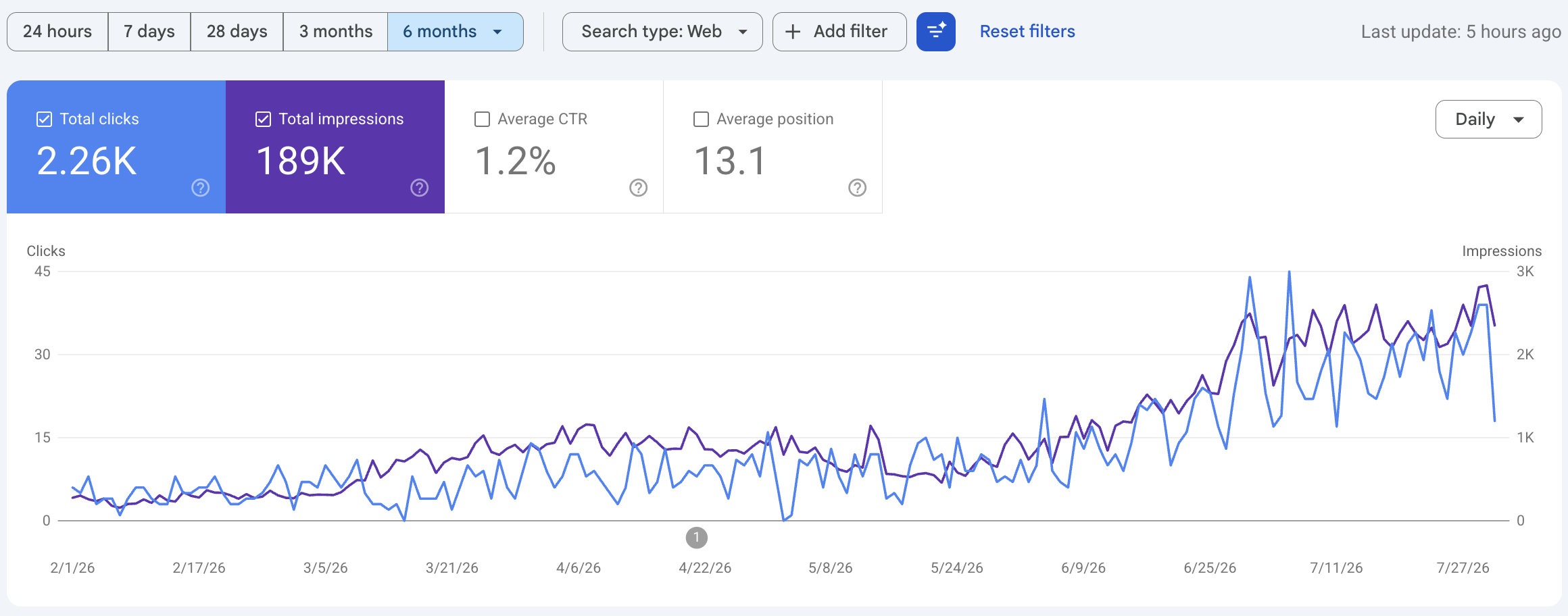
73% of the site's trailing-12-month Google clicks were generated inside the first four months of the engagement (1.32K of 1.81K clicks).
87% of trailing-12-month impressions came in the same window (119K of 137K).
Peak daily clicks reached roughly 10× the pre-engagement baseline (44/day vs. ~4/day).
The first #1 ranking arrived in 3 weeks — faster than typical, and I'll always caption it that way.
9 of the first 17 tracked keywords reached Google's top 5 within 60 days; 14 of 17 reached the top 10.
The Search Console curve tells the story visually: indexing first, then impressions climbing, then the page-one climb on tracked terms.
One honest caveat: this is one client in a favorable local vertical. Results vary by market and competition, and the 3-week #1 is the ceiling, not the promise. If you want the full context behind these numbers, meet the strategist behind these campaigns.
How to speed up SEO on a brand-new site
There are honest levers here — no hacks.
Fix indexing first. A page can't rank if Google can't index it. Resolve "noindex" tags and "discovered — currently not indexed" issues before anything else, because everything downstream depends on it. If you're not sure whether you have an indexing problem or a ranking problem, the plain-English diagnostic sorts it with one search.
Target low-competition local long-tail terms early. These are the fast wins that build momentum and give you real ranking data to work from — and per the Ahrefs finding above, the pages that do break through tend to do it fast.
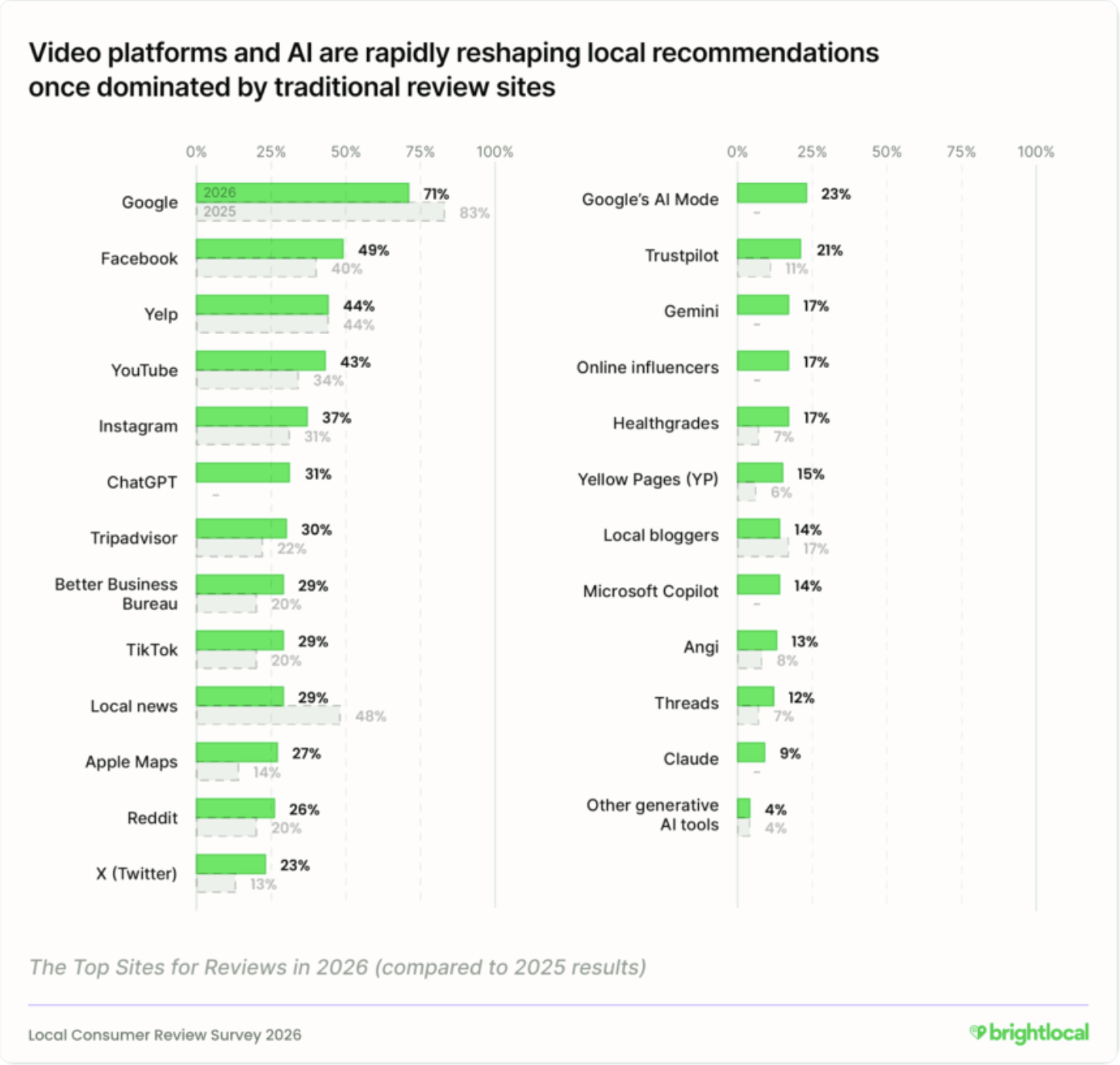
Go GBP-first. Set up and optimize your Google Business Profile — the listing that powers the map pack. On a new domain, a complete profile plus reviews often moves the local map pack faster than organic content. The trust effect is documented: per Google's own research, customers are 2.7 times more likely to consider a business reputable when they find a complete Business Profile on Search and Maps, and BrightLocal's Local Consumer Review Survey 2026 shows reviews remain central to how people find and choose local businesses.
Build a tight topic cluster. Interlinked content on one theme beats scattered one-off posts — and if you're deciding how much to publish, the cadence guide covers the honest math.
A word on the "rank in 10 days" pitches: fast outliers exist, but they almost always reflect low-competition targeting, not magic. Be skeptical of anyone selling the outlier as the norm.
When SEO is NOT your best first move — and how to hire without getting burned
Sometimes the honest answer is "not yet." If you launched yesterday with zero reviews and no Google Business Profile, spend your first few weeks on GBP and reviews before a full content retainer — that can move the map pack faster at launch than organic content on a brand-new domain.
If your booking flow is broken or your offer is weak, SEO won't fix it. It will just send traffic to a leaky funnel and cost you money. And if you need leads this month, paid ads may be the honest bridge while SEO compounds underneath.
When you are ready to hire, here's what to watch for:
"Guaranteed #1 rankings." No one controls Google's algorithm. Honest looks like ranges plus a risk-reversal offer.
No pricing until a call. That hides the real cost. Honest looks like published pricing.
No access to your own Search Console. You can't verify the work. Honest looks like full account access and reports.
"Results in a week." Only true for terms nobody searches. Honest looks like the 30–90-day local window, stated plainly.
On cost: legitimate small-business SEO typically runs $500–$5,000/mo. Our content engine is $125/blog — $1,500/mo at the recommended 12 (keyword research, on-page optimization, and the monthly rank report included), with 6- and 9-blog tiers on the live calculator, multi-location discounts of 10–20%, no setup fee, and a 3-month recommended run that goes month-to-month after. You can see our transparent pricing laid out in full.
On timeline: lower-competition local terms typically reach page one in 30–60 days, with compounding gains at 60–90+ days. The 3-week #1 is best case, not the promise.
The free visibility snapshot takes one reply: send your city and top service, and within 48 hours you'll see exactly where you rank today. Prefer proof first? Start with the free first batch — we target 6 keywords for your business, and if at least one isn't in Google's top 3, you owe nothing.
Frequently Asked Questions
How long does it take for a new website to rank on Google?
Meaningful results typically take 4–12 months, but low-competition local terms can hit page one in 30–60 days. The odds on competitive terms are steep — Ahrefs found only 1.74% of newly published pages reach the top 10 within a year. Your domain's age and your target's competitiveness are the biggest factors.
Can SEO really show results in 30 days?
Sometimes. On low-competition local terms, yes — our documented best case was #1 in three weeks. On competitive terms, no. Anyone guaranteeing 30-day results across the board is showing you a red flag, not a plan.
How long does local SEO take for a new business?
Local is often the fastest channel: page one on low-competition local terms in roughly 30–60 days, with compounding gains at 60–90+ days. A complete Google Business Profile plus reviews can move the local map pack even sooner than organic content on a new domain.
What is the Google Sandbox and does it still exist in 2026?
It's an informal term for a new domain's tendency to rank poorly while Google builds trust in it. Google says it has no literal sandbox, but has acknowledged algorithms that behave similarly while the system learns where a new site belongs. Treat it as debated-but-observable, not confirmed fact.
Why does SEO take so long for new sites?
New domains start with almost no trust signals — few links, no history, no established topical authority. Google has confirmed its systems need time to crawl, learn, and confirm a site's quality, sometimes over several months. That learning period is the main reason new sites move slower than established ones.
How do I find out if SEO is worth it for my business?
Start with the free visibility snapshot: send your city and top service, and within 48 hours you'll see where you currently rank. If you'd rather see proof before paying, the free first batch targets six keywords, and if at least one isn't in Google's top 3, you owe nothing.