How to Get Your Business Recommended by ChatGPT (What Actually Works in 2026)
You can't pay ChatGPT to recommend your business. Here's what actually works in 2026 — legibility, Bing indexing, reviews, and how to measure AI traffic.
By Evan Rief, Founder & Lead SEO Strategist
Last reviewed: August 2026
This post draws on real client campaigns — the Google Search Console and GA4 accounts behind the numbers below, which we're happy to walk through live on a call — and on named public sources including OpenAI's publisher documentation, Yext, Seer Interactive, and Google Search Central. Results vary by market and competition, and nobody — us included — can guarantee a ChatGPT recommendation. Anyone who promises one is selling you something.
Key Takeaways
You can't pay for it — ChatGPT recommends the most legible business, and eligibility starts with not blocking OpenAI's crawler.
Bing indexing is a structural gatekeeper: 87% of SearchGPT citations matched Bing's top results in Seer Interactive's study — versus only 56% for Google.
Roughly 86% of AI citations come from sources you already control — your website, listings, and reviews (Yext, from 6.8 million citations). For ChatGPT specifically, listings lead at 48.7%.
Consistent recommendation is a 6–12 month build; treat any "top of ChatGPT in two weeks" pitch the way you'd treat the same promise about Google.
You can measure AI traffic: ChatGPT appends
utm_source=chatgpt.com, but it undercounts — so read the trend, not the absolute number.
Can You Pay ChatGPT to Recommend Your Business?
You cannot pay ChatGPT to recommend your business. ChatGPT recommends the business it finds most legible — one with consistent name/address/phone details across the web, real reviews, mentions on trusted third-party sites, and answer-shaped content a crawler can read. Consistent recommendation is typically a 6–12 month build, not a two-week trick.
There is no ad slot inside ChatGPT's recommendations. No "sponsored" tier, no rep you can call to buy your way in. Anyone telling you otherwise is describing a product that doesn't exist.
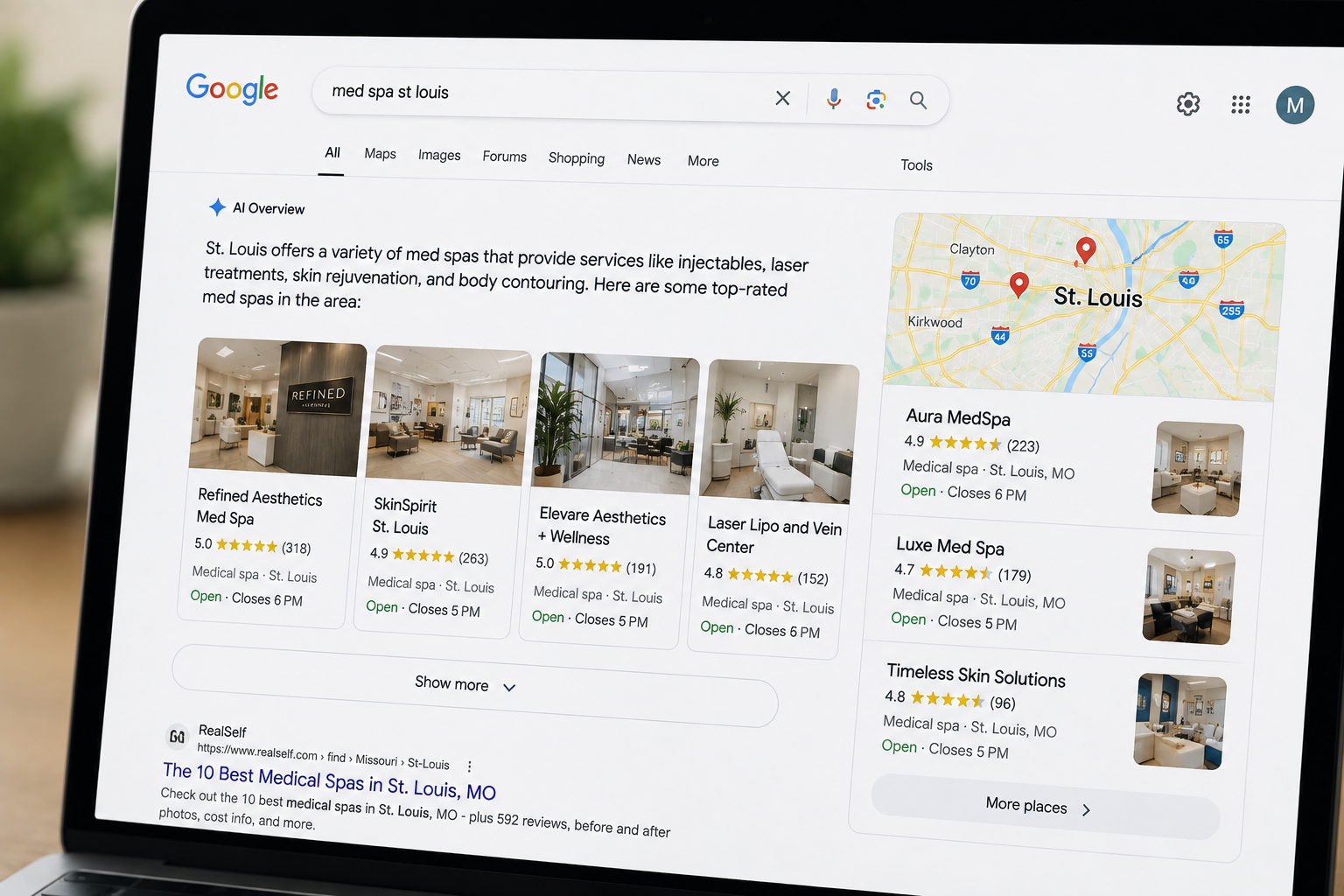
What does exist is eligibility. OpenAI's publisher documentation states that any public website can appear in ChatGPT search. To be included in summaries and snippets, you need to make sure you aren't blocking OAI-SearchBot — their search crawler. That's the front door.
But "appearing" and "being recommended" are two different things. Being eligible to show up is table stakes — it's not a promise that ChatGPT will name you when a customer asks for the best option. The rest of this post is about closing that gap; the discipline underneath it goes by the name answer engine optimization, and the fundamentals are the ones covered below.
How ChatGPT Actually Decides Which Businesses to Recommend in 2026
ChatGPT doesn't "know" your business the way a person does. It retrieves and synthesizes from pages it can read and trust. A handful of levers decide whether you're one of them:
Entity legibility — an "entity" is a business that Google and AI systems recognize as a consistent, real-world thing. Scattered or contradictory details make you illegible.
NAP consistency — your name, address, and phone matching everywhere they appear.
Reviews — real, current customer reviews on the platforms ChatGPT draws from.
Third-party mentions — reputable sites referencing your business.
Retrieval via Bing — ChatGPT search leans heavily on Bing's index.
That last point isn't an afterthought. Seer Interactive's SearchGPT citation study — built on 500+ citations — found that 87% of SearchGPT's citations matched Bing's top organic results when the same question was run as a query, with most in the top 10 positions. Google's results matched only 56% of the time. If Bing hasn't indexed and ranked you, you're structurally hard to cite.
The rest is more encouraging. Yext's analysis of 6.8 million AI citations across ChatGPT, Gemini, and Perplexity found that 86% of citations come from sources brands already control. Broken down: first-party websites generated 44% of citations, listings 42%, and reviews and social 8%. And here's the ChatGPT-specific detail: of the three AI platforms, OpenAI leans on listings hardest — 48.7% of its citations. For ChatGPT visibility specifically, your listings footprint is the single biggest source.
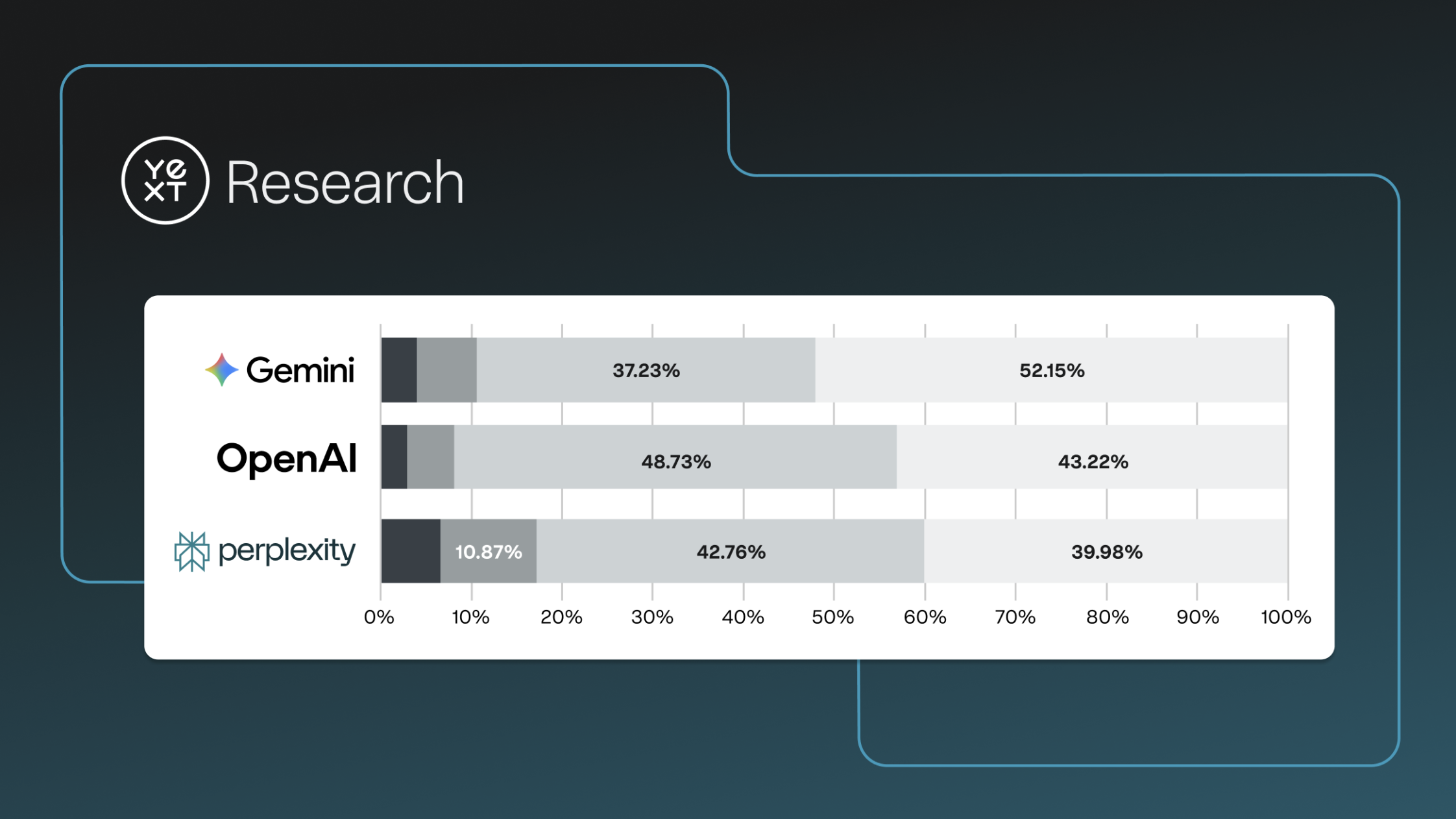
Read that again: the levers are mostly things you own. Answer-shaped content on your own site — the kind we build through the monthly content engine — sits right alongside them.
The Mechanic: How to Become the Business ChatGPT Recommends
Here's the concrete work, each move with the reason behind it:
Make your NAP identical everywhere. Consistent name, address, and phone across your site, Google Business Profile, and every directory. Contradictions make you illegible as an entity — and remember, listings are ChatGPT's single biggest citation source. This part is owner-doable with a spreadsheet and an afternoon; it just has to actually get done.
Get real reviews. Reviews are an influenceable citation source in the Yext data — and one of the few signals you can grow deliberately by simply asking happy customers.
Earn mentions on trusted third-party sites. Industry publications, local news, reputable directories. Industry data suggests these third-party mentions feed AI citations.
Publish answer-shaped content. Lead with the answer; use question-form headings. Ahrefs' AI Overviews research has found "best X" list-format content disproportionately cited in AI answers. Google hasn't explicitly said structure influences citation, but synthesis requires extractable claims — content that leads with clear answers and descriptive headings is easier for any system to process.
Check that you're not blocking the crawler. Look at your robots.txt for OAI-SearchBot. OpenAI's documentation notes that blocking it keeps you out of summaries and snippets. This ties directly back to the Bing-indexing gatekeeper — and if robots.txt and indexing are unfamiliar territory, the plain-English diagnostic walks through exactly how they work.
Add schema. Schema is structured data that labels your business facts for machines — LocalBusiness, Organization, and FAQPage markup. Honestly: schema helps machines read you cleanly, but its direct impact on AI citations is contested. Treat it as good hygiene, not a magic switch.
None of these is exotic. They're the same fundamentals that make you rank on Bing and Google — which is exactly why they feed ChatGPT.
Test It Yourself: How to Check If ChatGPT Already Recommends You
Before you spend a dollar, run the test. Open ChatGPT (and optionally Perplexity and Gemini) and ask the buyer-intent question a real customer would — "best physical therapist in [your service area]" or "where should I go for [your service]."
Run that same prompt 5 to 10 times. This matters: AI recommendations are non-deterministic — the same prompt returns different businesses on different runs. In our own testing across client accounts, we routinely see a business named on three runs and absent on the next two. One run tells you almost nothing.
Score each run: recommended, mentioned, cited with a link, or invisible. Then run the same prompts for two or three competitors as a baseline. That's your honest starting position.
If you're screenshotting results (worth doing), date them — this is a fast-moving target, and a screenshot from three months ago may not reflect what a customer sees today. When we run this for clients, we save timestamped screenshots of every run so we can show movement over time rather than argue from memory.
Don't over-read a single lucky hit or a single miss. You're looking for a pattern across runs — how often you surface, and where you sit relative to the competitors you actually lose customers to.
How to See Your AI-Driven Traffic (the utm_source=chatgpt.com Setup)
You can measure some of this in GA4. OpenAI states that ChatGPT automatically includes utm_source=chatgpt.com in referral URLs from ChatGPT search results, which makes tracking possible.
To capture it cleanly, go to Admin > Data Display > Channel Groups and create a new channel group. Add a channel named "AI Traffic," set Session source to matches regex with the AI domains you care about, then drag it above Referral so those sessions get grouped correctly.
Now the two caveats you won't hear from a tool vendor:
It undercounts. ChatGPT only began passing utm_source=chatgpt.com relatively recently, so measured AI traffic is already an undercount of actual AI-influenced visits. On top of that, mobile app traffic, free-tier sessions, and noreferrer links strip referral data — so many real AI visits land in your reports as "direct."
GA4 is adding partial native support. Google has begun rolling out a native "AI Assistants" channel grouping in GA4 — check whether your property has it. It's useful, but it doesn't catch everything, which is why the custom channel group above is still worth building as a supplement.
The practical upshot: AI referrals tend to be higher-intent visits, but read the trend over months, not the absolute number in any single report. The number is directionally true and precisely wrong.
A Real Result: What Happened When We Did This for a Client
Here's one campaign, with the numbers we can show you live. A multi-location medical wellness client came to us and the engagement began in March 2026. Google Search Central's guidance on people-first content rewards first-hand expertise from having actually used a service — so rather than describe the theory, here's what the accounts show.
In the first four months, that site generated 73% of its trailing-12-month Google clicks (1.32K of 1.81K) and 87% of its trailing-12-month impressions (119K of 137K). Peak daily clicks reached roughly 10× the pre-engagement baseline — about 44 a day versus around 4 before we started.
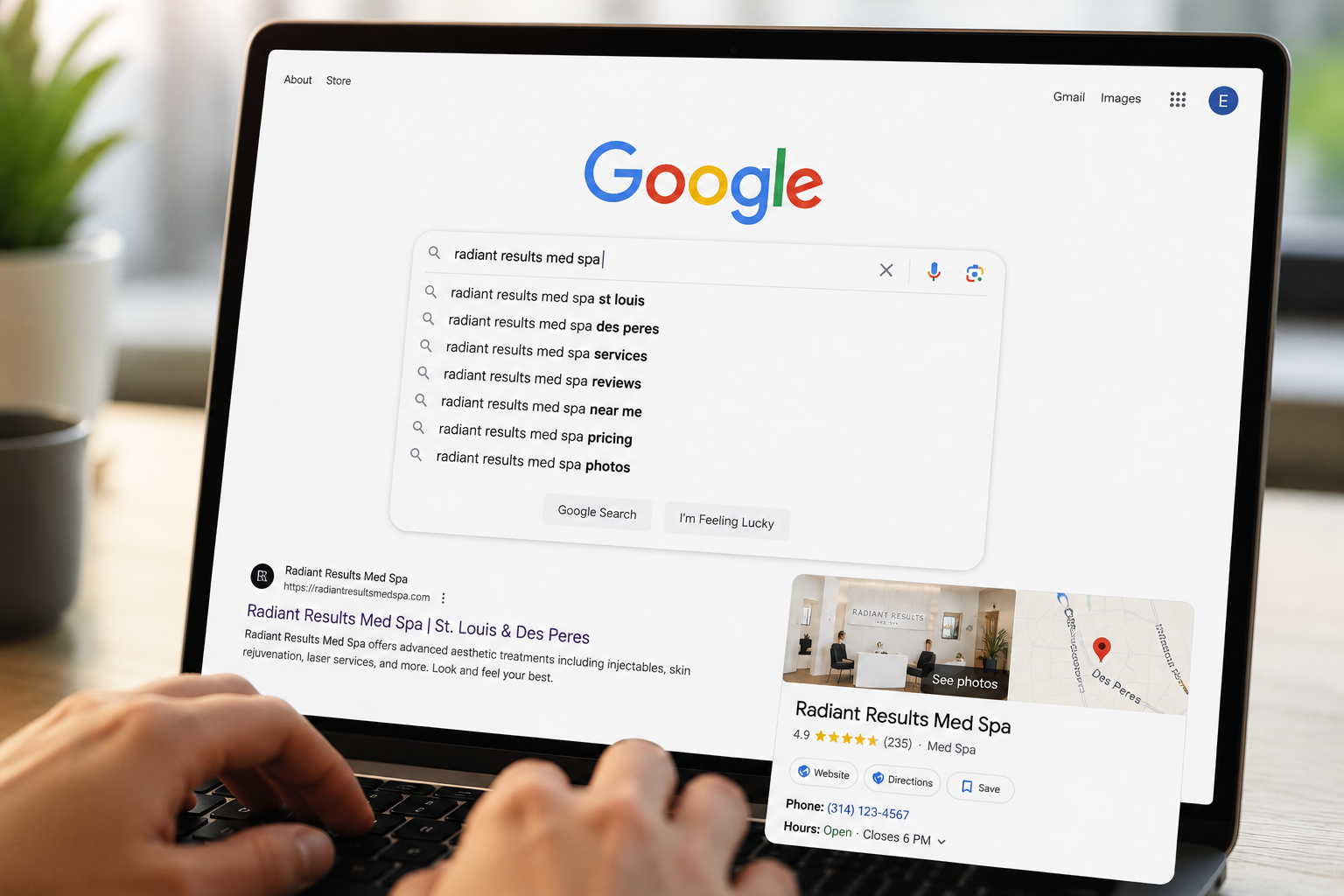
On rankings: the first #1 ranking landed in 3 weeks. I want to be clear that this is faster than typical — the best case, not the promise. More representative was the spread: 9 of the first 17 tracked keywords reached the top 5 within 60 days, and 14 of 17 were in the top 10.
Everything above is organic Google and Bing visibility — the foundation that feeds ChatGPT. It's the legibility and ranking base that makes a business eligible to be cited, though the AI recommendation itself stays probabilistic. We're happy to walk through this live Search Console account on a call so you can see the trend yourself, not just my summary of it. If you want the economics first, see how the content engine is priced.
What to Ignore: Inflated Stats, llms.txt Hype, and Other 2026 GEO Myths
This corner of the internet is polluted. A few things to actively discount:
"You can pay for placement." Covered above — there's no ad slot. Any pitch built on this is either uninformed or dishonest.
"Reddit is where AI recommendations come from." The Yext data says otherwise: once location and query intent are applied, Reddit and similar forums accounted for just 2% of citations. Your website and listings outweigh the forums by more than 40 to 1.
Suspiciously precise viral stats. You'll see "312% lead lifts" and "85–97% visibility rates" with no checkable source. The pattern to watch: an oddly precise percentage, published by the party selling the fix, with no linked study. I won't name domains, but you can spot the tell yourself.
"llms.txt will fix it." This one's genuinely contested — some push it hard, others say skip it. We've found no credible evidence that llms.txt influences AI citations, and none of the major AI platforms has confirmed it as a ranking signal. Don't build your strategy on it.
"AI killed SEO — just do GEO." Google states that AI Overview optimization supplements traditional SEO; it doesn't replace it. Since ChatGPT retrieval leans on Bing's index, ranking well remains the foundation, not a legacy chore. If you want the fuller budget math on this, here's how the AI-era numbers shake out for a local budget.
The pattern across all of it:
"Pay to appear in ChatGPT." No ad slot exists. Build legibility and reviews instead.
"Top of ChatGPT in two weeks." It's a 6–12 month build. Expect compounding gains, not a switch.
"llms.txt will get you cited." No credible supporting evidence. Focus on fundamentals.
"312% lift" type stats. Unsourced and self-interested. Trust checkable, named studies.
When You Should Not Chase ChatGPT Recommendations Yet (+ What Our Help Costs)
I'd rather lose the sale than take money for work that won't pay off yet. Wait if:
You're brand-new with zero reviews and no citation footprint. Build your Google Business Profile fundamentals and earn your first reviews first. There's nothing for an AI to cite yet.
There's no demonstrated AI-query demand in your service area. Don't over-invest ahead of a market that isn't asking yet.
Your budget would be better spent fixing a broken booking flow or a weak offer. SEO and AI visibility bring people to the door. They can't fix what happens after — that's a business problem, not a search problem.
A note for regulated verticals: in our campaigns, medical, dental, and therapy practices hit more friction. AI assistants apply safety guardrails and are more cautious recommending in sensitive fields, so these practices should lean harder on legible facts, real reviews, and reputable third-party mentions. Expect a slower, more evidence-dependent build.
When it does make sense, here's exactly what we charge. The content engine is $125/blog — $1,500/mo at the recommended 12 (keyword research, on-page work, and the monthly rank report included), with 6- and 9-blog tiers on the live calculator, multi-location discounts of 10–20%, no setup fee, and a 3-month recommended run that goes month-to-month after. For context, legitimate small-business SEO typically runs $500–$5,000/mo.
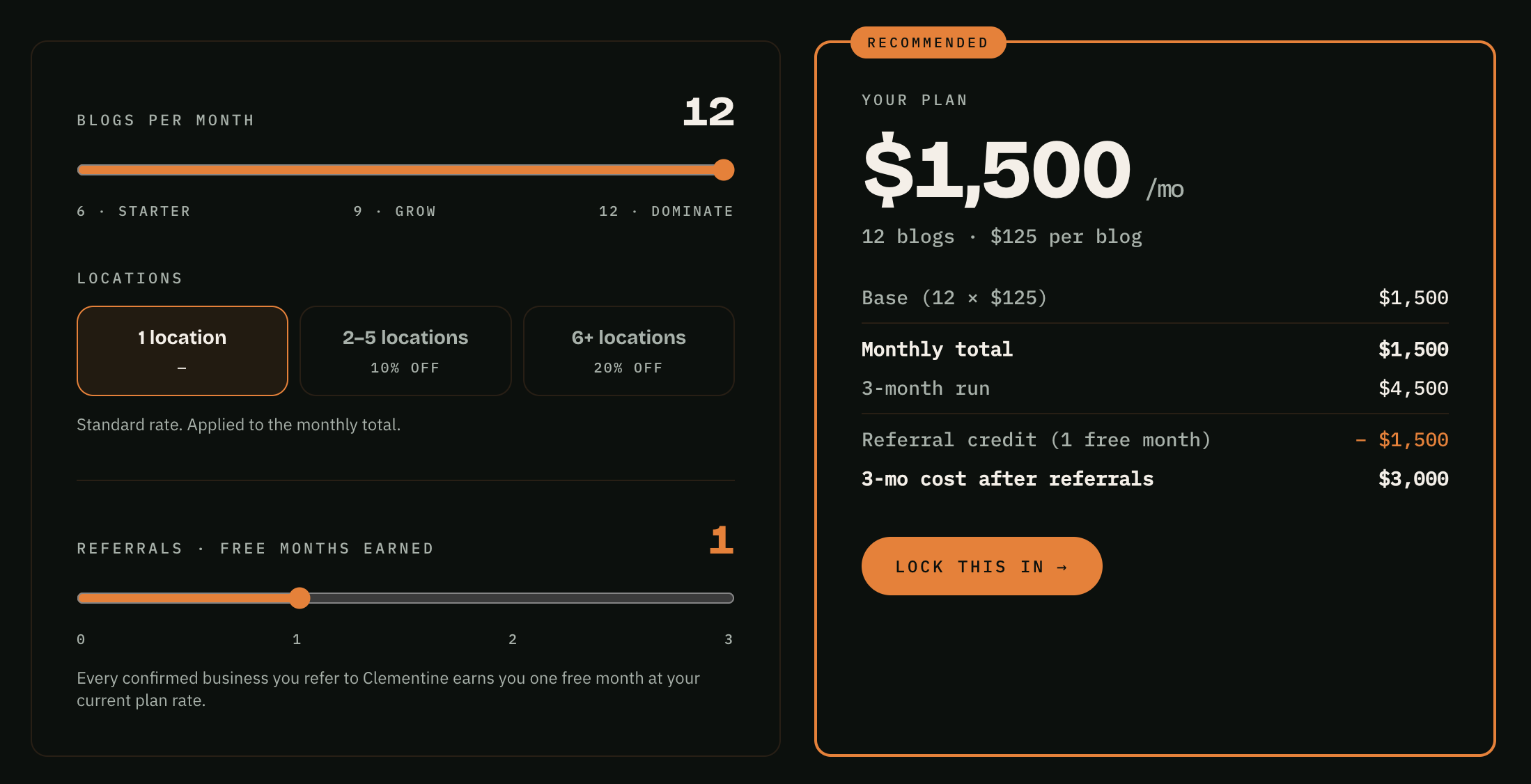
On timelines: lower-competition local terms typically reach page 1 in 30–60 days, with compounding gains at 60–90+ days. The case study's 3-week #1 was the best case, not the promise.
The free visibility snapshot takes one reply: send your city and top service, and within 48 hours you'll see where you rank today. Or start with the free first batch — we target 6 keywords for your business; if at least one isn't in Google's top 3, you owe nothing.
Frequently Asked Questions
Can you pay to get recommended by ChatGPT?
No. There is no paid placement in ChatGPT's recommendations. It recommends the business it finds most legible — consistent name/address/phone, real reviews, trusted mentions, and readable content. OpenAI's documentation confirms eligibility starts with not blocking their crawler, but that's exposure, not a purchase.
How does ChatGPT decide which businesses to recommend?
It retrieves and synthesizes from pages it can read and trust, leaning heavily on Bing's index. Seer Interactive found 87% of SearchGPT citations matched Bing's top results (versus 56% for Google), and Yext found 86% of AI citations come from brand-controlled sources like your website, listings, and reviews — with listings the top source for ChatGPT specifically.
Why does ChatGPT recommend my competitor and not me?
The first thing to check is Bing — not just Google. Since ChatGPT search relies on Bing's index, a competitor who ranks better on Bing or has a stronger citation footprint gets cited more often. Check your Bing indexing and your reviews and mentions first.
How long does it take to get recommended by ChatGPT?
A well-structured page can be re-crawled and cited on specific questions within weeks. Consistent recommendation for open-ended queries typically takes 6–12 months of building legibility, reviews, and mentions. None of this is guaranteed — AI recommendations remain probabilistic even after the work is done.
Do customer reviews affect ChatGPT recommendations?
Yes. Reviews are one of the influenceable citation sources in Yext's analysis of 6.8 million AI citations. They're also one of the easiest signals to grow deliberately — you can ask satisfied customers directly, which most businesses simply don't do consistently.
How do I find out if getting recommended by ChatGPT is worth it for my business?
Start with the free visibility snapshot: send your city and top service, and within 48 hours you'll see where you rank today. Or start with the free first batch — we target 6 keywords, and if at least one isn't in Google's top 3, you owe nothing. That tells you whether the foundation is worth building.